

Not even a single bit of ado today, my friends. Here’s the latest ancient news. 👇
🗞 Ancient News: Top 5
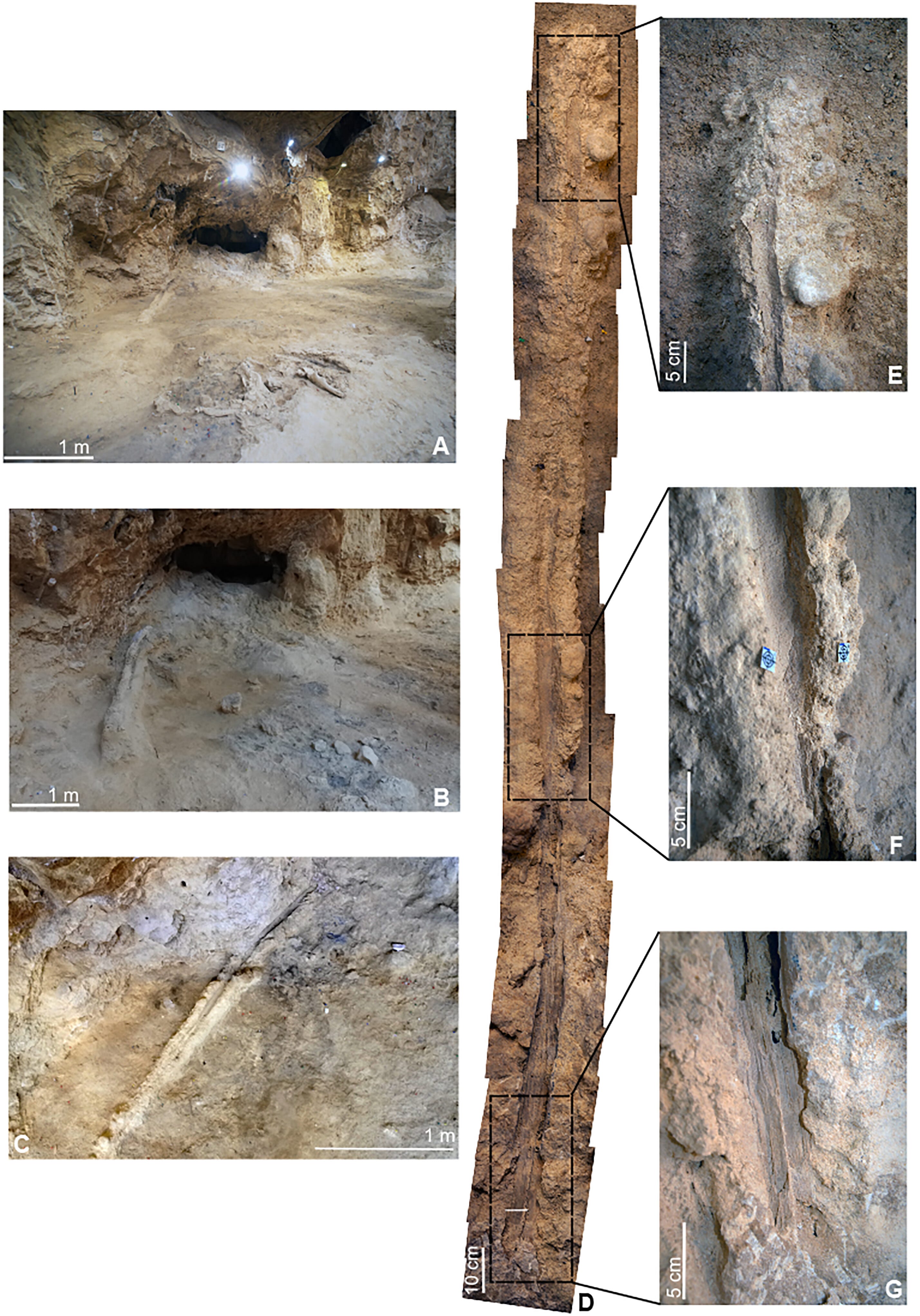
Neanderthal Woodworking at Abric Romaní: Insights Into the Role of Wood in a Middle Paleolithic Domestic Context — A study of 597 wooden remains and impressions from Abric Romaní, a rock shelter near Barcelona, Spain, reveals that Neanderthals manufactured sophisticated wooden weapons, tools, and household objects between approximately 62,000 and 40,000 years ago. The remains were recovered from 16 archaeological layers, with 13 identified as deliberately worked or used objects. Among them are two wooden spears measuring approximately 8 feet and 6.5 feet long, including one with a carefully shaped point. Another remarkable discovery is a club-like object carved from a single piece of wood, featuring a handle and thick, pointed head unlike any previously documented prehistoric tool. Other finds include possible bark containers or trays, crossed wooden poles potentially forming a raised food-preparation platform, and a straight wooden element nearly 17 feet long that may have been part of a structure. Although most of the original wood decayed, calcium carbonate deposits preserved detailed impressions in travertine rock. The discoveries suggest that woodworking played a much greater role in Neanderthal technology and daily life than surviving stone artifacts alone would indicate.
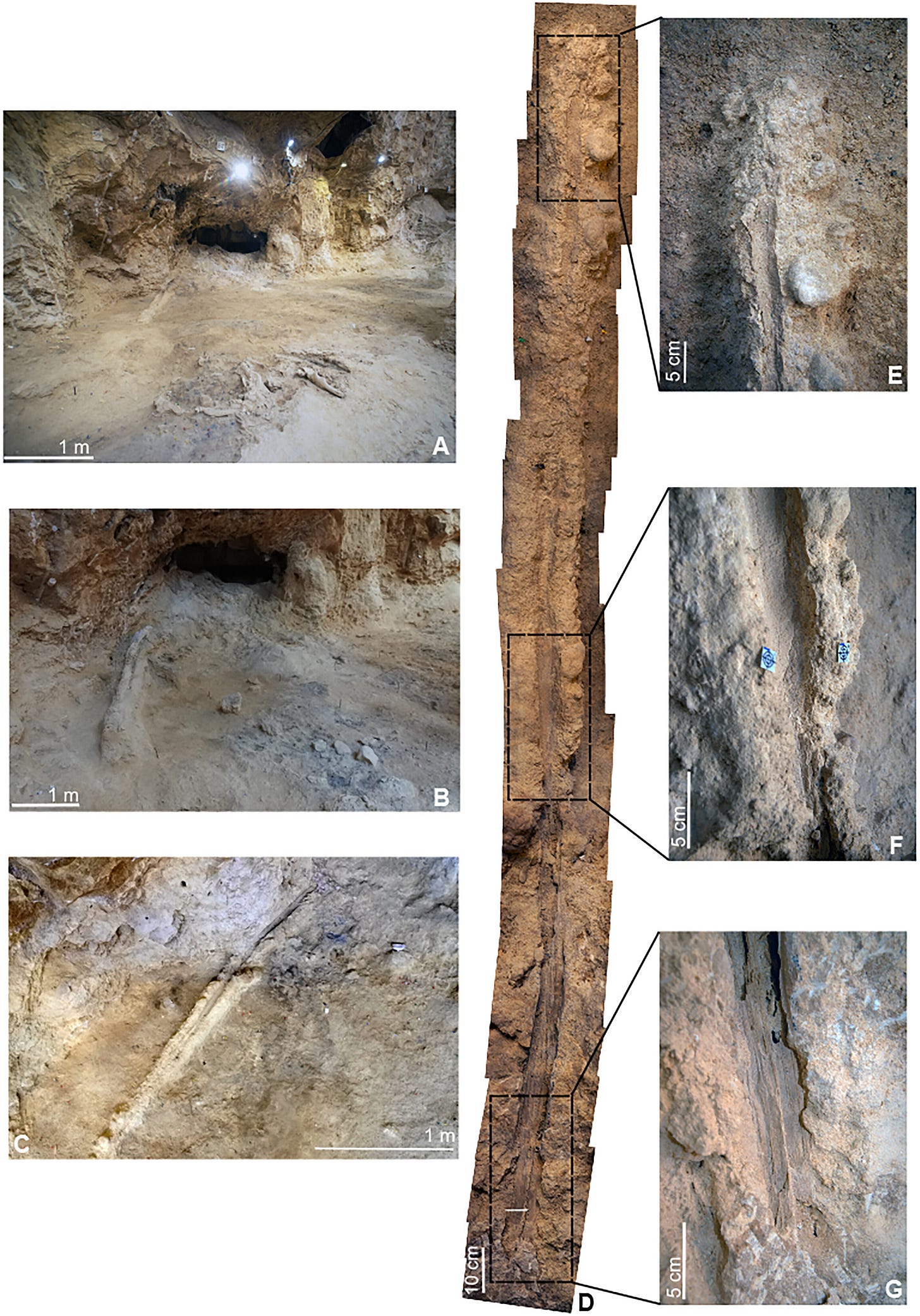
Image credit:redit: P. Saladié/IPHES and DOI: 10.1126/sciadv.aeh2287 Sunken Silk Road City Reveals Central Asia’s Lost History — Underwater excavations in Lake Issyk-Kul, Kyrgyzstan, are revealing the remains of a medieval Silk Road city that disappeared beneath the water roughly 800 years ago. The settlement, which may have covered nearly 2 square miles, stood along a major trade route connecting China and Europe. It may have flourished under the Karakhanid dynasty, which controlled much of Central Asia between the ninth and early 13th centuries CE. Its original name and population remain unknown. Discoveries include two cemeteries apparently dating to the region’s early Islamic period, an elaborately decorated public building that may have been a mosque, bathhouse, or religious school, animal bones, pottery fragments, and a child’s chamber pot known as a tuvaq. The animal remains could reveal details about inhabitants’ diets, while pottery analysis may help establish the settlement’s chronology and trade connections. Systematic underwater investigations began in 2024, more than a century after the ruins were first identified. The city’s disappearance remains mysterious, although an earthquake, landslide, or earthquake-induced natural dam may have caused the flooding.
Ancient Auroch Skull Found Impaled on Wooden Stake — A 10,500-year-old aurochs skull mounted on a wooden stake has been discovered in the Duvensee Moor near Lüchow, in Schleswig-Holstein, northern Germany. The skull, recovered in 2025, was found just a few yards from what is considered northern Germany’s oldest known grave, excavated in 2022–2023. Despite being broken into several pieces, the skull is nearly complete, thanks to exceptional preservation in the waterlogged peat. Its placement may have been part of a Mesolithic funerary ritual, possibly intended to protect the deceased. Hunter-gatherers in the region are thought to have cremated their dead and buried the remains alongside material from funeral pyres. Aurochs, the extinct wild ancestors of domestic cattle, were imposing animals that once ranged across Europe, Asia, and North Africa. More than 20 prehistoric sites have been identified across the moor. Further examination of the skull and jaw will investigate how the stake was inserted. Meanwhile, the gradual drying of the wetland threatens the preservation of ancient wood, bone, and other organic remains.
Ancient Ethiopian Palace Could Have Stood 16 Stories High, Study Finds — A new structural analysis suggests that a 2,800-year-old palace in Yeha, northern Ethiopia, could theoretically have supported as many as 16 stories. Known as Grat Be’al Gibri, the monumental complex dates to around 800 BCE and measures approximately 197 by 197 feet, making it one of the largest known palace-like structures of its era in East Africa and South Arabia. Although only its foundations and parts of the ground floor survive, previous reconstructions proposed an eight-story building. The palace featured stone-and-clay walls reinforced with horizontal wooden beams, some made from African olive and Cordia africana, both resistant to termites. Its ground-floor walls were around 6.2 feet thick, while its foundation walls reached 7.2 feet. A foundation platform stood nearly 20 feet high, with entrance pillars rising approximately 33 feet. Computer simulations indicate that the structure could have supported twice its previously estimated maximum height, although there is no evidence that it actually did. The palace was eventually destroyed by fire, rather than necessarily collapsing under its own weight.
When Did People Arrive in the Americas? — A new review of archaeological, genetic, and environmental evidence suggests that the ancestors of most Indigenous Americans arrived between approximately 20,000 and 14,000 years ago, during the Last Glacial Maximum and its aftermath. The analysis evaluated three competing migration scenarios: arrival before 25,000 years ago, during the period of extensive Ice Age glaciation, or after ice sheets retreated around 14,000 years ago. Ancient DNA indicates that Northern and Southern Native American populations had already diverged approximately 15,000 years ago, supporting an earlier migration. However, no identified genetic evidence currently places this population split before 25,000 years ago. Archaeological sites suggesting human activity at earlier dates may represent populations that left few or no surviving descendants, or whose genetic traces have not yet been recovered. The findings favor migration during the later Ice Age while acknowledging that the archaeological and genetic records remain incomplete.
That’s it for the free Top 5! If you’re a free subscriber, sign up for the paid plan for another 24 discoveries and 1 recommended piece of content.
Until next time, thanks for joining me!
-James
Twitter: @jamesofthedrum
P.S. Here’s my Buy Me A Coffee link if you’d like to support my efforts with a donation.
P.P.S. If you want access to the paid version but it’s a little too steep for you right now, just email me — I want this to be accessible.
P.P.P.S. Paid members, read on!
