

Hello, friend — welcome to issue #208 of Ancient Beat.
Here’s the latest ancient news. 👇
🗞 Ancient News: Top 5
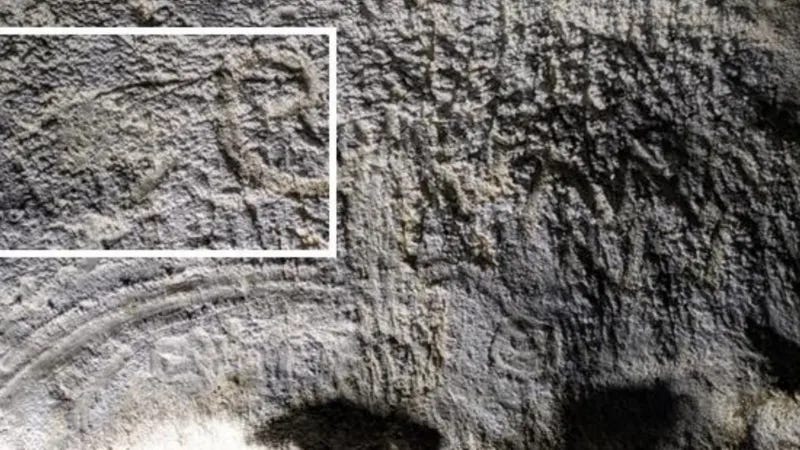
Ancient Cave Art Discovery Suggests First Known Humans in Ireland Walked Over From Wales — Rock art identified in eight caves in southwest Ireland may push known human activity on the island back to at least 15,000 years ago—about 5,000 years earlier than previously accepted evidence. During the Ice Age, lower sea levels may have exposed a roughly 46-mile-wide land corridor between Pembrokeshire in Wales and the Rosslare area of Ireland, potentially allowing hunter-gatherers to follow herds of mammoth, bison, reindeer and wild horses westward. A computer model based on characteristics of prehistoric cave sites in south Wales identified 28 promising Irish caves; eight contained apparent art. The finds include limestone engravings, ochre and charcoal paintings, fingertip lines pressed into clay and possible images of deer and mammoths. Some finger markings may even have been made by children. The caves’ precise locations are being withheld to protect them from vandalism and looting.
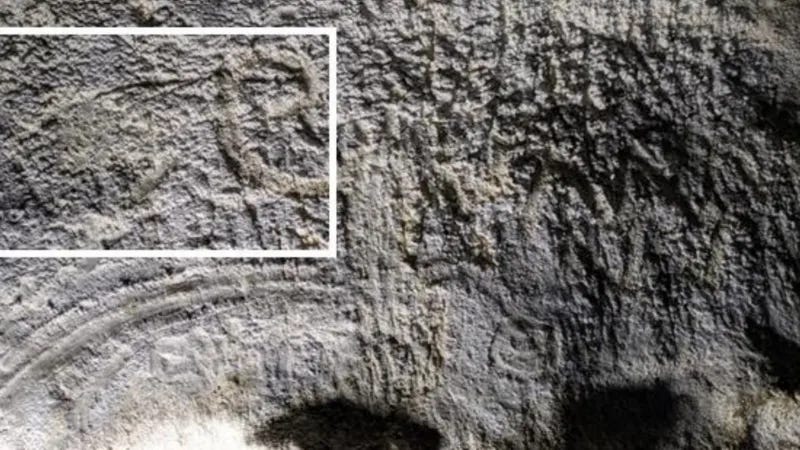
Image credit: George Nash — Lost Land Bridge Project Ice Age Origins of One of Humanity’s Oldest Drug Habits Discovered — Not a fan of this article’s title — “drug habit” puts a negative modern spin on something we don’t fully understand. But I digress. Human remains from Sulawesi, Indonesia, suggest people were habitually using psychoactive betel nuts as early as 25,000 years ago, pushing the practice deep into the Ice Age and long before agriculture. Two hunter-gatherers, dating to 25,000–16,000 and 7,600–6,300 years ago, had distinctive deep, rounded grooves in their teeth. Chemical analysis also detected arecoline, betel nut’s main psychoactive compound, in their dental tissue. Experiments indicate that simply sucking whole nuts releases enough arecoline to produce physiological effects, including mild euphoria and heightened alertness, without the lime used in modern betel quids. The habit may initially have helped soothe toothaches, since arecoline has painkilling properties, but prolonged sucking severely wore down teeth, sometimes exposing the pulp and increasing infections. The evidence may represent the world’s earliest known habitual use of a neuroactive plant drug.
Devil’s Arrows: Ancient Builders Hauled 55,000-Pound Stones 11 Miles for Britain’s Tallest Stone Row — Britain’s Devil’s Arrows, three enormous standing stones near Boroughbridge in North Yorkshire, were deliberately transported about 11 miles from Brimham Rocks rather than gathered locally. Each weighs more than 55,000 pounds, and the tallest rises around 23 feet, making the monument Britain’s tallest surviving prehistoric stone row. The stones were probably moved and erected during the Late Neolithic or Early Bronze Age, perhaps around 2000 BCE. To identify their source without damaging them, scientists lifted microscopic mineral grains with adhesive tape and compared their geological age “fingerprints” with possible quarry areas. The match to Brimham Rocks also rules out the idea that glaciers carried the stones naturally. Choosing such a distant source suggests the landscape itself may have held cultural or spiritual importance, while transporting and raising stones this large required substantial planning and coordination.
Did Wildfires Help Spark the Invention of Pottery? — A new hypothesis suggests severe wildfires and erosion in the southern Levant may have helped Neolithic communities discover pottery. During the early Holocene, especially around 7500–6200 BCE, intense burning stripped vegetation and soil from hillsides, washing huge quantities of clay-rich terra rossa into the Jordan and Dead Sea valleys. Large farming settlements later clustered on these fertile deposits. The idea is that wildfires may have accidentally baked exposed clay, showing people that heat could turn soft earth into a hard, durable material. Early Yarmukian pottery from the Jordan Valley was made from the same redeposited terra rossa. The theory remains unproven: clay generally needs temperatures around 932–1,292°F to become ceramic, and researchers have not yet demonstrated that wildfire-baked clay predates the earliest pottery. Similar fires 129,000–116,000 years ago produced no ceramics, suggesting environmental opportunity alone was not enough.
‘Heel-Strike’ Allowed Early Humans to Walk Farther at Cost of High Impact Forces — Heel-first walking appears to be a distinctive human adaptation that made long-distance movement more energy-efficient but placed greater stress on bones and joints. Experiments comparing human walking with chimpanzees moving on two and four limbs found that chimpanzees varied their foot placement far more, with foot-strike angles spanning 2.4 to 8.6 times the human range, and often landed on the side or front of the foot instead of the heel. Humans consistently struck heel-first. When people were made to land on the front of the foot, walking required about 26–41% more metabolic energy. Heel strikes therefore reduce energy costs but produce higher peak forces and faster loading. Early hominins with smaller heels and more primitive leg joints may have faced a trade-off between damaging impacts and inefficient walking; later evolution of larger heels and stronger lower-limb joints could have supported safer, farther-ranging travel associated with hunting, gathering and dispersal.
That’s it for the free Top 5! If you’re a free subscriber, sign up for the paid plan for another 26 discoveries and 2 recommended pieces of content.
Until next time, thanks for joining me!
-James
Twitter: @jamesofthedrum
P.S. Here’s my Buy Me A Coffee link if you’d like to support my efforts with a donation.
P.P.S. If you want access to the paid version but it’s a little too steep for you right now, just email me — I want this to be accessible.
P.P.P.S. Paid members, read on!
