

This is a good day, friends. Let’s make the most of it.
If you’d like to kick it off with some spicy ancient tidbits, you’re in the right place.
This is issue #206 of Ancient Beat. Here’s the latest ancient news. 👇
🗞 Ancient News: Top 5
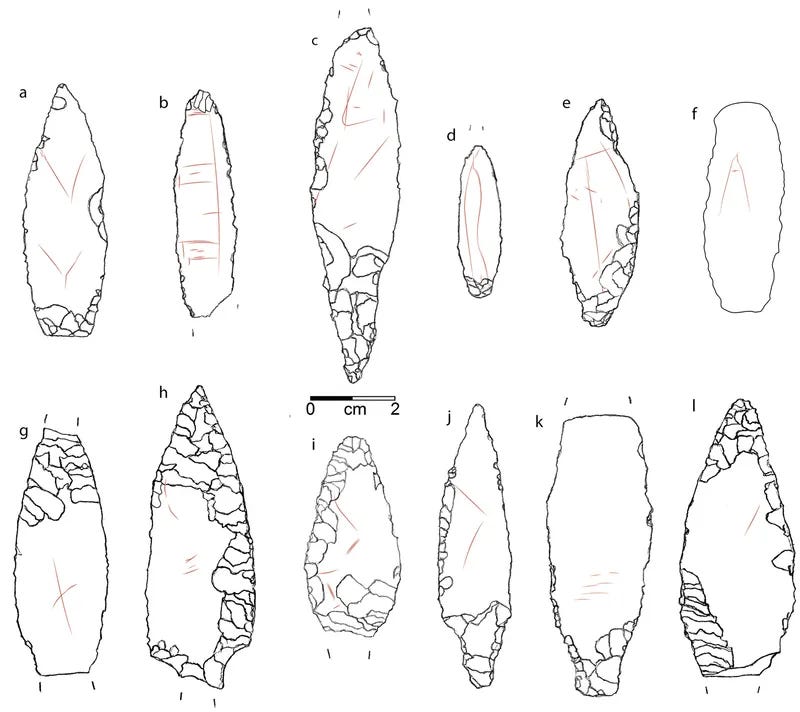
Cryptic Engravings on 9,000-Year-Old Arrowheads Hint at Unique Neolithic Traditions, but Archaeologists Can’t Figure Out What They Mean — Eleven engraved obsidian arrowheads dating to roughly 9,000–8,000 years ago have been identified at Tepecik-Çiftlik in central Anatolia, Turkey, bringing the regional total to just 54 among thousands of known obsidian points. Each carries a unique geometric design. No two designs are identical: markings include squares, V-shaped lines, and simpler incisions. The markings were clearly intentional: creating them required hard materials such as flint and repeated strokes, with one line retraced around 20 times. Yet the decorated points are otherwise indistinguishable from ordinary arrowheads. They were found in houses and stone-working areas rather than special ritual contexts, and use-wear indicates they could still be used for hunting or combat. Some were engraved before final edge retouching and others afterward. Whether the markings denoted identity, decoration, ritual meaning, magic, or several different purposes remains unknown.
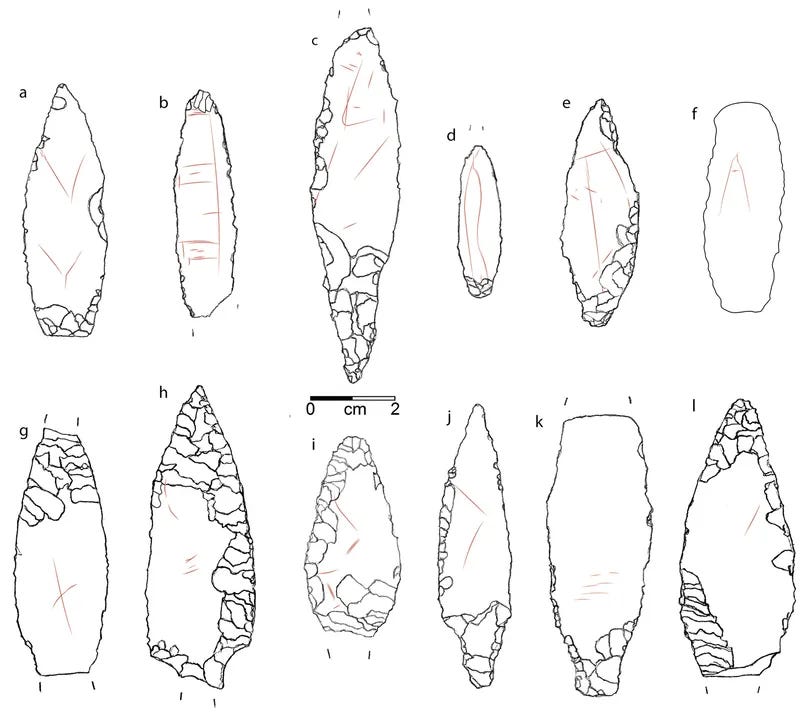
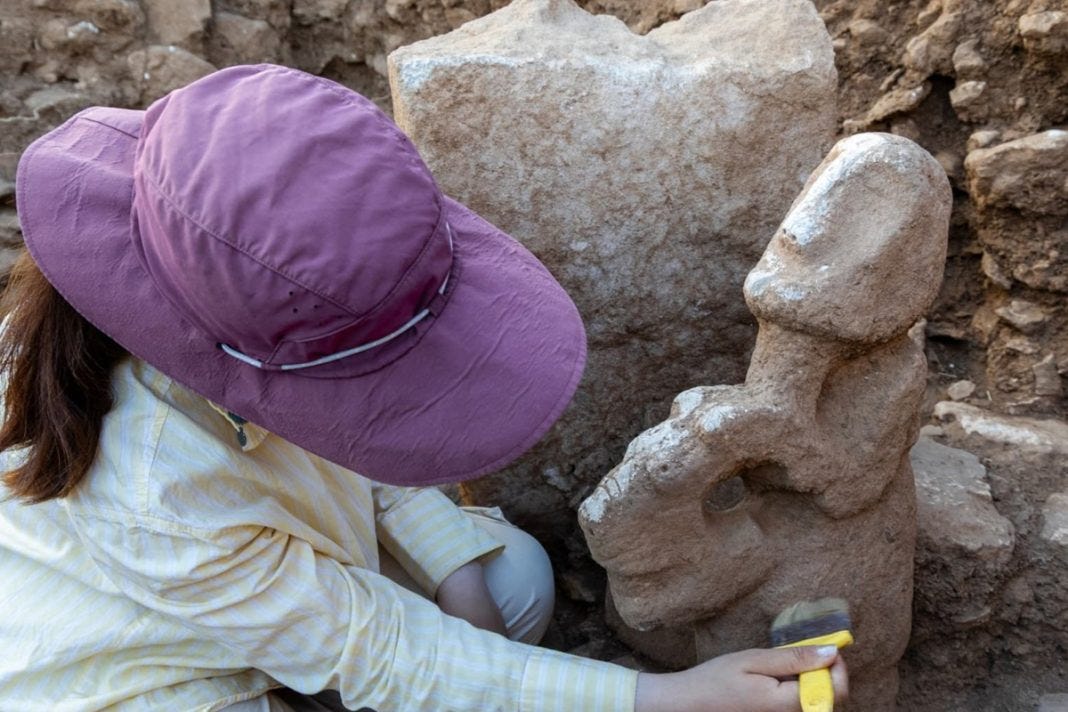
Image credit: Vinet et al., PLOS One (2026) Rare Neolithic Sculpture Unearthed at Türkiye’s Karahantepe — While we’re talking about Turkey, an approximately 11,000-year-old stone sculpture showing a human seated on the back of a leopard has been uncovered at Karahantepe. The unusual composite sculpture is about 28 inches long and combines human and animal imagery in a form not previously encountered at the site. It was found resting on a bench built along the wall of a circular structure about 10 feet across, whose floor was carefully paved with flat stones. Its meaning is unknown, but its placement suggests it formed part of the activities conducted inside the building rather than being a stray decorative object. Karahantepe lies about 19 miles from Göbeklitepe and belongs to the wider cluster of early Neolithic “Stone Hills” sites, where monumental architecture and elaborate imagery were being created more than 10,000 years ago as communities adopted increasingly settled ways of life.
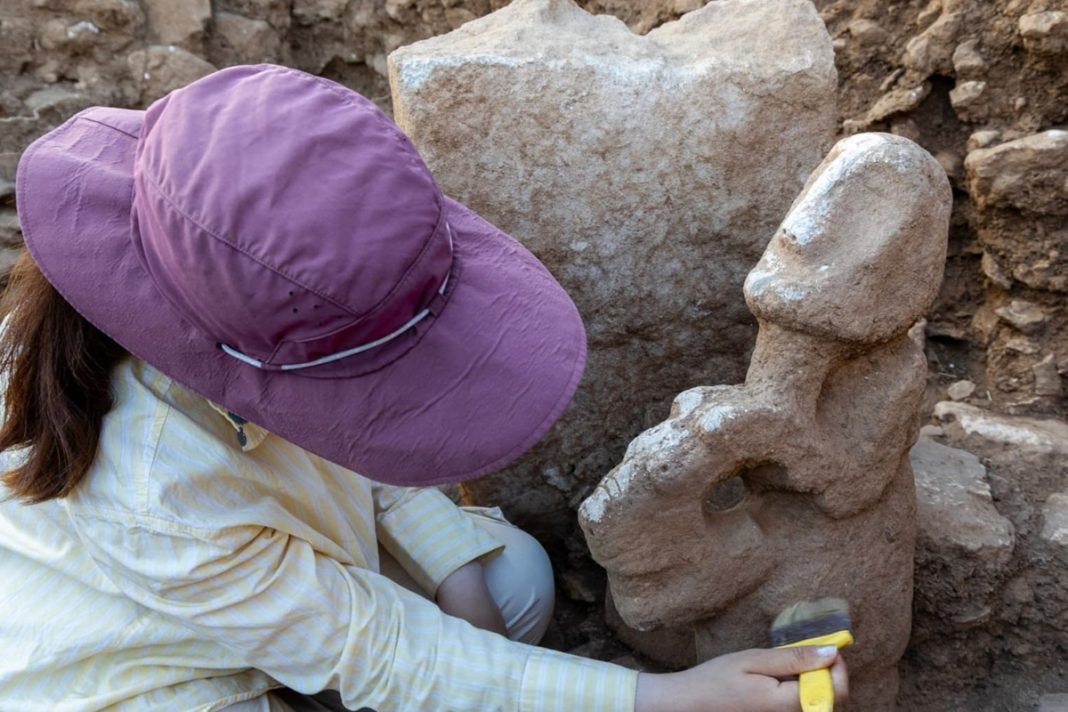
Image credit: AA Prehistoric Turtle Figurines Found in Turkey — Annnd another one from Turkey. About 25 limestone turtle figurines dating to roughly 14,500–11,200 BCE have been uncovered at İn Cave near Gedikkaya Hill in Bilecik Province. Some were coated with clay, and the largest measures just under 1 foot long and about 8 inches wide. Many are roughly or partially shaped and were deliberately inserted into the ground around circular architectural arrangements, suggesting the cave had a ritual function during the Epipaleolithic period. Intriguingly, Gedikkaya Hill itself resembles a turtle, and many of the smaller carvings may have been modeled on its outline. The discovery hints that the landscape, turtles, and ideas such as longevity or endurance may have been linked symbolically by hunter-gatherers thousands of years before agriculture became widespread in Anatolia.
Ancient DNA Reveals Cacao Was Consumed in Present-Day Georgia 1,000 Years Ago — Ancient DNA recovered from pottery at the Etowah Mounds in present-day Georgia, USA suggests that people in the Mississippian city were consuming cacao during the 11th and 12th centuries CE. Three pottery sherds, about 800–900 years old, came from feasting pits connected with construction of the site’s first platform mound. Earlier chemical tests had detected caffeine but could not distinguish cacao from native plants such as yaupon holly, which contains similar compounds. DNA preserved in the pottery residues provided more direct evidence of cacao itself. Etowah covered about 54 acres and contained six large earthen mounds, plazas, and a village. Because cacao only grows naturally in tropical regions, its presence in Georgia points to long-distance exchange networks linking the Mississippian Southeast with cacao-producing regions much farther south, although its precise origin and trade route remain unknown.
6,500-Year-Old Czech Sanctuary May Have Tracked the Sun and Moon 1,000 Years Before Stonehenge — A roughly 6,500-year-old ceremonial enclosure near Chleby in the Czech Republic may have served as a monumental astronomical sanctuary around 4500 BCE. The nearly circular complex spans about 755 feet and was surrounded by a ditch more than 8 feet deep, with 12 deliberately positioned entrances. Two apparent observation points align with extreme positions of the Moon during its roughly 18-year cycle and with summer-solstice sunrise and winter-solstice sunset. Bull skulls and horns found near entrances may once have decorated monumental gateways. The site remained important long afterward: a Bronze Age burial containing about 18 people was added gradually over time. By the Iron Age, the ditch was being filled and an ordinary settlement occupied the former sanctuary.
That’s it for the free Top 5! If you’re a free subscriber, sign up for the paid plan for another 28 discoveries and 4 recommended pieces of content.
Until next time, thanks for joining me!
-James
Twitter: @jamesofthedrum
P.S. Here’s my Buy Me A Coffee link if you’d like to support my efforts with a donation.
P.P.S. If you want access to the paid version but it’s a little too steep for you right now, just email me — I want this to be accessible.
P.P.P.S. Paid members, read on!
