

Hello, all you lovable scoundrels. This is issue #201 of Ancient Beat.
Here’s the latest ancient news. 👇
🗞 Ancient News: Top 5
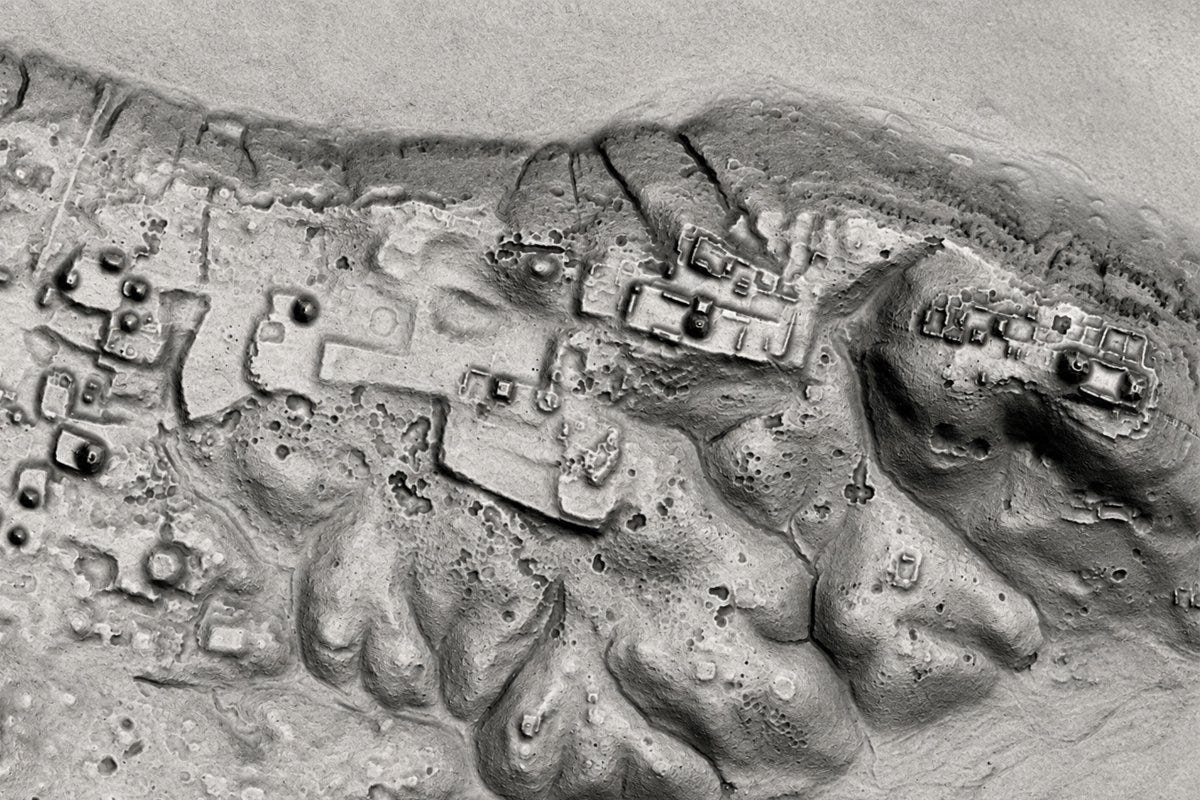
Hidden Maya Metropolis Mapped in Mexico’s Balam Kú Biosphere Reserve — The first detailed ground survey of El Yesal, deep within the Balam Kú Biosphere Reserve in Campeche, Mexico, has mapped one of the largest Maya cities in the Central Lowlands. Its monumental center covers more than 0.4 square miles. The Great Acropolis occupies a platform roughly 492 feet on each side and 49 feet high, supporting four pyramids, the tallest rising another 89 feet. Mamom- and Chicanel-phase ceramics suggest the city was founded between about 600 BCE and 200 CE. It expanded substantially during the Late Classic period, from 600 to 900 CE, with new plazas, buildings, artificial terraces, and apparently defensive hilltop complexes. A weathered stone stela depicts a ruler carrying a ceremonial staff and wearing a storm-deity headdress. Concentric rectangular and circular “nested complexes” beside the acropolis may have served as marketplaces.
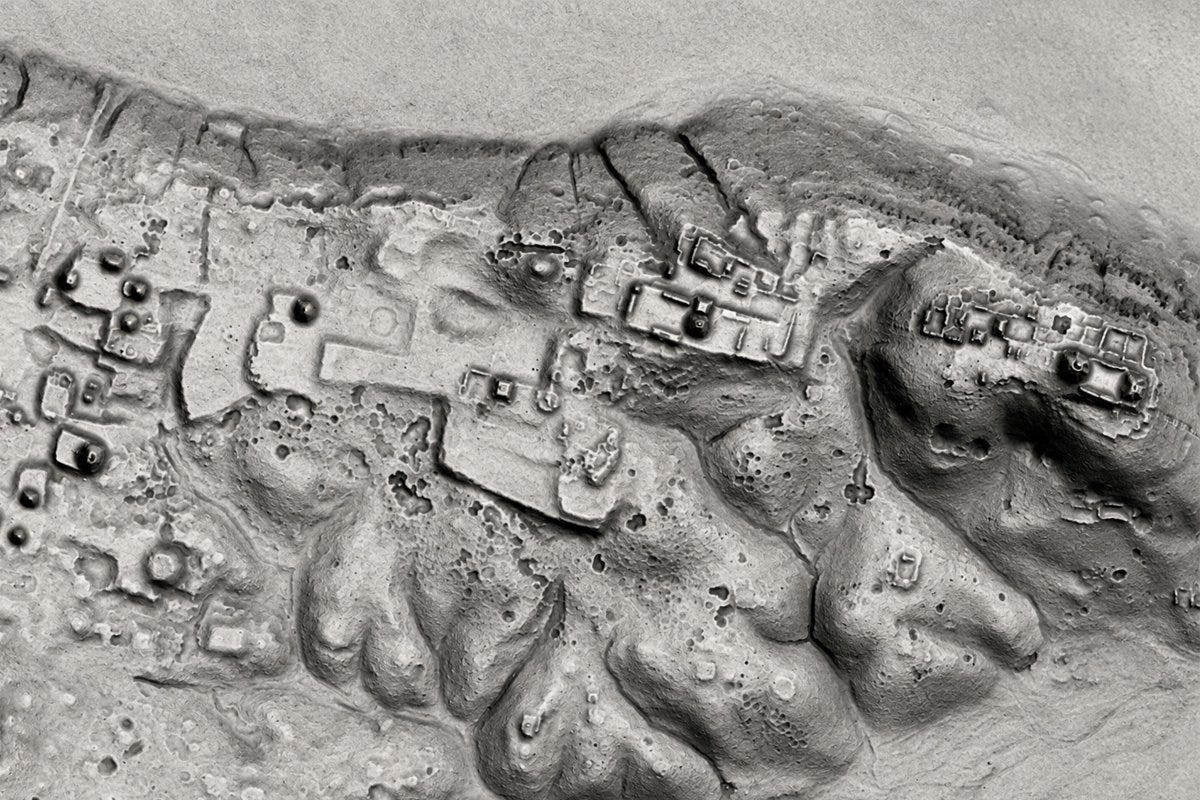
Image credit: INAH Astronomer’s Name Deciphered From Ancient Mayan Ruins for First Time: “White-Chested Fox” — A faded wall inscription at Xultun in northern Guatemala has revealed the first known name of an individual Classic Maya mathematician-astronomer: Sak Tahn Waax, or “White-Chested Fox.” Written in 781 CE inside a small painted chamber, the text ends with a phrase meaning “so says Sak Tahn Waax,” directly crediting him with an unusually sophisticated formula. The room contained more than 50 miniature mathematical and astronomical texts and may have served as a workshop where specialists prepared calculations for bark-paper codices. Digitally enhanced drawings, photographs, and scans exposed 11 difficult-to-read glyphs. The formula connects the 260-day ritual calendar, the 365-day solar year, and the cycles of Venus and Mars over an eight-year period, arranging familiar units in a way not previously seen in Maya writing. The discovery preserves a rare glimpse of scientific work in progress—and of the person credited for it.
Ancient Roman Farm Women Made Wine, Oil, and Profits. Historians Dismissed Them as “Housekeepers” — A new paper reviewed ancient farming manuals, laws, funerary inscriptions, mosaics, wall paintings, and archaeological remains, finding that female managers on Roman agricultural estates handled far more than domestic work. Often enslaved, these women supervised grape pressing, fermentation, and the addition of salt, wormwood, fennel, or boiled grape juice as preservatives and flavorings. They also oversaw olive-oil production, poultry, seasonal food processing, workspace maintenance, and religious offerings intended to secure abundant harvests. Roman wineries and oil facilities used enormous presses inside specialized buildings and could produce roughly 13,200–26,400 gallons annually—or more—placing female managers at the center of large, profitable operations. An estate mosaic from Sicily depicts women at agricultural work, while another mosaic and a Roman wall painting may show women directing sacrifices and winemaking labor.
New Study Reveals Children Drive Cultural Change — Children are not simply passive recipients of adult traditions: a wide-ranging analysis argues that people ages 3 to 17 create and maintain their own peer cultures, including games, songs, stories, slang, rules, and specialized knowledge of plants, animals, and local environments. These practices may circulate largely beyond adult supervision and can be passed between generations of children. Exploration and experimentation within peer groups introduce new ideas and greater diversity into a community’s collective knowledge, potentially helping societies adapt to environmental shifts, social disruption, and climate change. Child-created traditions may therefore contribute directly to cultural evolution and community resilience. The findings challenge approaches that treat childhood mainly as preparation for adulthood, instead presenting children as active innovators whose ideas can preserve useful knowledge, generate new solutions, and influence broader cultural change. Not overly archaeological, sure, but I think this applies because we’re talking about how cultures are shaped. It reminds me of an article I read years ago about how evidence of children’s activities found in archeological layers were thought of as “disturbances” for a long time — annoyances, rather than valuable discoveries. Which reminds me of a more recent paper that talked about children’s roles in cave art — and how they were sometimes the people leading spiritual journeys in caves because they were seen as having a closer connection to other realms. Ok, now I’m ranting. My point is that kids are awesome and their contributions are valuable. Archaeology (and the world at large) oughta give ‘em more credit. End rant.
Newly Discovered Rock Art Sites Shed Light on Ancient Ceremonial Landscape — Eight previously undocumented rock art sites have been recorded in the Valdecañas mountain range near Fresnillo, Zacatecas, Mexico, bringing the area’s known total to nine. Created roughly between 800 and 1400 CE, the sites extend across 3.1 miles of rugged terrain, with some painted panels covering up to 66 feet of rock walls and ceilings. Red pigment dominates, forming straight, zigzag, and wavy lines, triangles, circles, dots, and occasional human and animal figures. A gallery in the middle of a stream may have hosted fertility and hunting ceremonies. The consistent geometric style suggests a long-lived regional tradition, distinct from nearby art depicting goats and people. Circular dwellings have also been found nearby, although their relationship to the painters is unclear. Several panels are threatened by recreational climbing equipment and foot traffic.
That’s it for the free Top 5! If you’re a free subscriber, sign up for the paid plan for another 24 discoveries and 3 recommended pieces of content.
Until next time, thanks for joining me!
-James
Twitter: @jamesofthedrum
P.S. Here’s my Buy Me A Coffee link if you’d like to support my efforts with a donation.
P.P.S. If you want access to the paid version but it’s a little too steep for you right now, just email me — I want this to be accessible.
P.P.P.S. Paid members, read on!
