

Happy Mother’s Day (in the US), friends!
To all the mothers out there, thank you. You are incredible. Truly.
And, of course, a special shoutout to the mama of this household — my wife, Teela. I am forever in love you. 😻
Anyone have time for a quick break? Because here’s the latest ancient news. 👇
🗞 Ancient News: Top 5
Buried in Arnhem Land, an Ancient Fire Trick May Rewrite Early Stone Technology’s Timeline — Archaeologists working in Arnhem Land, northern Australia, identified evidence for deliberate heat treatment of chert stone that may be the oldest known example in the world. The technique involved carefully heating stone before knapping, making it easier to shape into sharper and more predictable tools. The Australian material dates to roughly twice the age of previously known Eurasian examples, potentially pushing the origins of heat-treated stone technology far deeper into prehistory. Excavations uncovered heat-altered chert fragments, flakes, and manufacturing debris buried within ancient occupation layers. The discovery suggests early Australians developed complex pyrotechnological knowledge independently and far earlier than expected.
Evidence of What May Be the World’s Oldest Cremation Found in Ethiopia, New Study Reveals — Burned human bone fragments discovered in Ethiopia’s Afar Rift may represent the oldest known cremation ever identified, dating to roughly 100,000 years ago. The remains were uncovered in the Faro Daba beds within the Dawaitoli Formation, where erosion has exposed Stone Age sediments rich in early human activity. The fragments belonged to one of three Homo sapiens individuals found at the site and showed clear signs of deliberate burning rather than accidental exposure to wildfire. Archaeologists also recovered Middle Stone Age tools nearby, including stone blades and flakes associated with early human occupations in eastern Africa. If confirmed, the find would dramatically push back the timeline for complex mortuary behavior and controlled use of fire in funerary practices.
Ancient Culture Mastered Advanced Flooring Technique Thousands of Years Before the Romans — Excavations at the Pre-Pottery Neolithic settlement of Aşıklı Höyük in central Turkey revealed that people were producing sophisticated dolomitic lime plaster floors around 8200 BCE, nearly 8,000 years before similar techniques appeared in the Roman world. The polished white floors were created by heating dolomite-rich stone to extremely high temperatures before mixing it into plaster, a technically demanding process previously thought beyond the capabilities of such early societies. Some of the floors were repeatedly resurfaced and carefully maintained, suggesting they held social or symbolic importance beyond simple practicality. The plastered interiors appeared in densely packed mudbrick homes that formed one of the earliest large settled communities in Anatolia. Researchers believe the discovery dramatically changes understanding of Neolithic technological skill, showing these early farming communities possessed advanced knowledge of pyrotechnology, construction, and material engineering far earlier than previously believed.
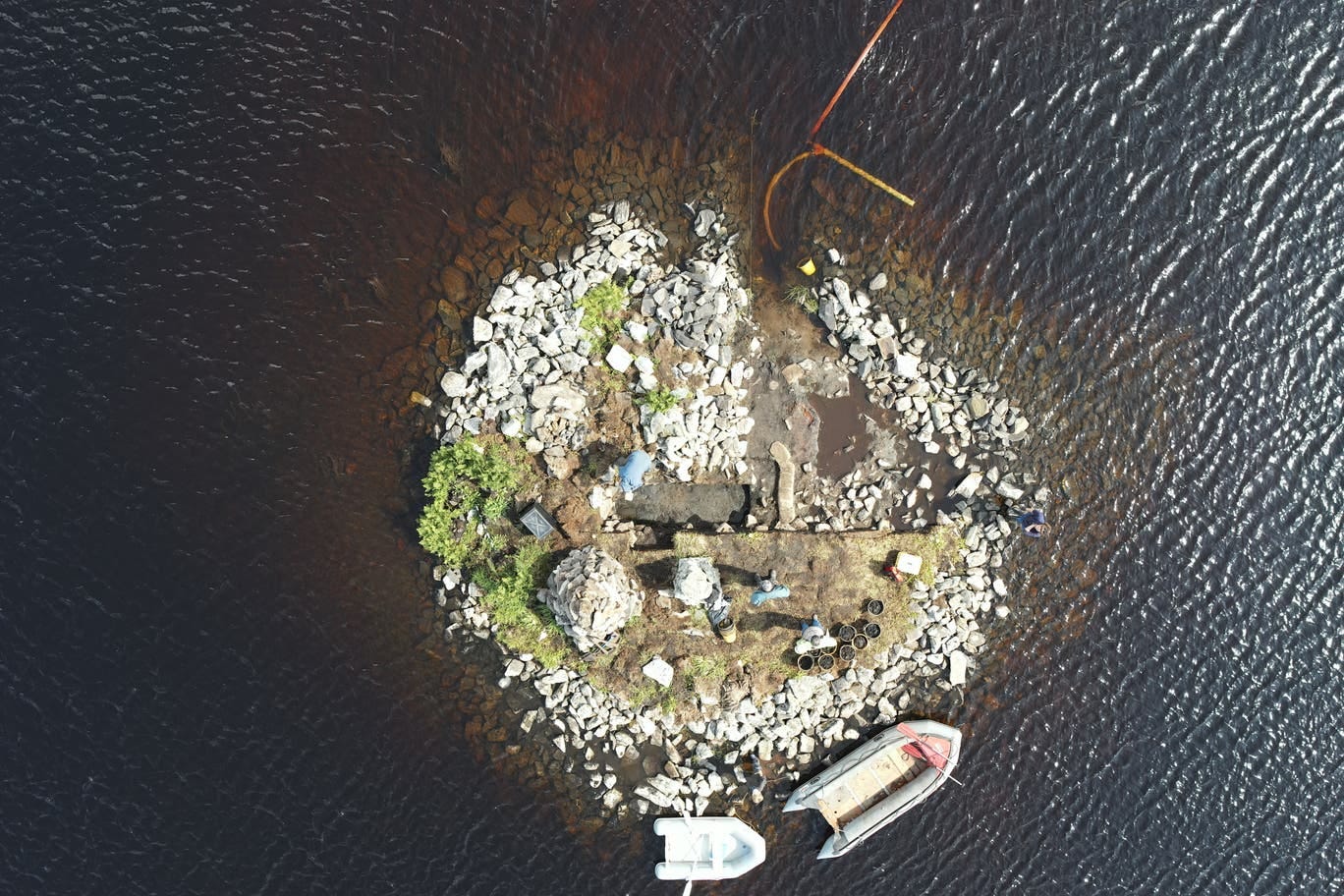
Archaeologists Reveal Secrets of Artificial Island Older Than Stonehenge in Scottish Loch — Archaeologists investigating a crannog in Loch Bhorgastail on the Isle of Lewis uncovered evidence that the artificial island was originally built around a massive timber platform dating to roughly 3500–3300 BCE, making it older than Stonehenge. Although the island now appears to be a mound of stone, excavations revealed a sophisticated wooden foundation roughly 75 feet across beneath the surface, constructed from layered timber and brushwood. Hundreds of Neolithic pottery fragments were also recovered from the surrounding waters, suggesting the site played an important ceremonial or social role. Researchers found that the island underwent multiple construction phases over thousands of years. Around 2,000 years after the initial platform was built, additional layers of brushwood and stone were added during the Middle Bronze Age, followed by renewed activity during the Iron Age. A submerged stone causeway linking the shore to the island also survives beneath the loch. The discoveries suggest Neolithic communities in the Outer Hebrides were capable of organizing major engineering projects long before previously assumed.
Modern Experiments Suggest Rhino Teeth May Have Been Part of Neanderthal Toolkits — Experimental archaeology suggests Neanderthals may have used rhinoceros teeth as specialized tools in addition to butchering the animals for food. Tests showed the extremely hard teeth could effectively retouch and sharpen stone implements, functioning similarly to bone retouchers found at Paleolithic sites. Researchers recreated wear patterns by scraping hides, working wood, and refining stone edges, then compared the microscopic damage to archaeological specimens. The study indicates rhino teeth may have been valued because they were tougher and more durable than many other organic materials available to Neanderthals during the Middle Paleolithic. The findings also point to more flexible and inventive use of animal remains than previously assumed, with carcasses potentially supplying meat, hides, bones, and dental tools in a single resource package.
That’s it for the free Top 5! If you’re a free subscriber, sign up for the paid plan for another 32 discoveries and 1 recommended piece of content.
Until next time, thanks for joining me!
-James
Twitter: @jamesofthedrum
P.S. Here’s my Buy Me A Coffee link if you’d like to support my efforts with a donation.
P.P.S. If you want access to the paid version but it’s a little too steep for you right now, just email me — I want this to be accessible.
P.P.P.S. Paid members, read on!
