

Good morning, friends!
Who likes learning about Neanderthals? I sure do. They’re in the news this week, so let’s get right into it.
Here’s the latest ancient news. 👇
🗞 Ancient News: Top 5
Scientists Think They Finally Know Why Neanderthals Vanished — A new modeling study of Europe between roughly 60,000 and 35,000 years ago suggests Neanderthals did not disappear solely due to climate change or competition with modern humans, but because of weaker and less reliable social networks. Using archaeological sites as data points, researchers reconstructed habitat “core areas” capable of supporting groups of about 25–50 individuals across territories of roughly 965 square miles, factoring in climate shifts, geography, and population dynamics. While both Neanderthals and early modern humans maintained connections between groups—evidenced by material movement—Homo sapiens occupied more interconnected regions, forming flexible networks that allowed migration, resource sharing, and support during crises. Neanderthal groups, particularly in Central and Eastern Europe, appear to have been more isolated, with fragile links that broke down as climate variability intensified. The study also indicates regional differences: western populations, such as those in Iberia, may have survived longer due to stronger connectivity. Their eventual disappearance likely resulted from a combination of environmental instability, demographic pressures, and interaction with Homo sapiens, including competition and interbreeding.
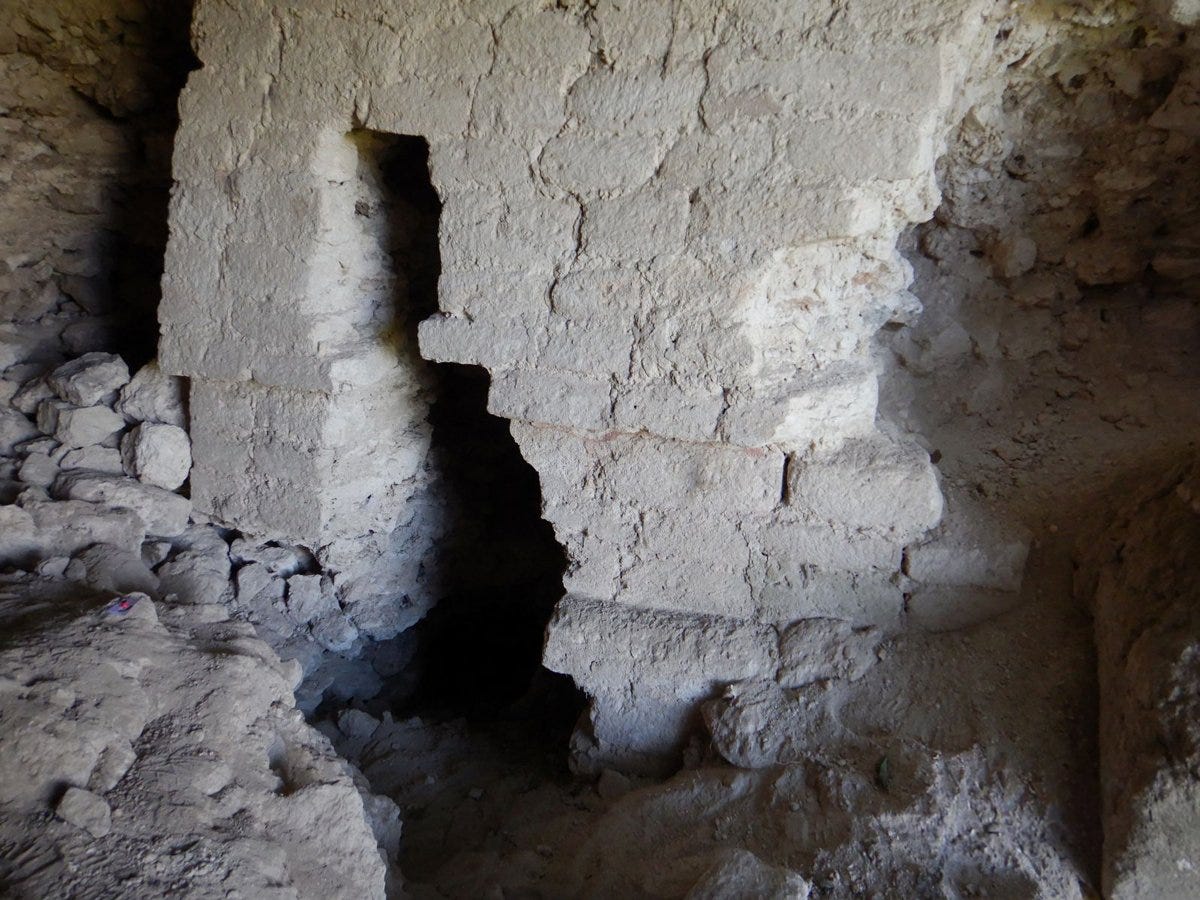
Neanderthal Brain And Cognition Reconsidered — While we’re on the topic of Neanderthals, a reassessment of Neanderthal brain structure challenges the long-standing idea that they were cognitively inferior to modern humans. Although Neanderthals had slightly larger brains on average and different shapes—more elongated compared to the more rounded modern human skull—these anatomical differences fall well within the range of variation seen among living human populations. Comparisons using brain imaging data show that differences between modern human groups can equal or exceed those between Neanderthals and early Homo sapiens. Crucially, links between brain anatomy and cognitive performance are extremely weak, with estimated differences in cognitive ability between Neanderthals and modern humans amounting to only about 0.14 standard deviations—indicating substantial overlap in abilities. Archaeological evidence further supports this, with Neanderthals displaying symbolic behavior such as pigment use, ornamentation, and constructed cave features dating as far back as about 176,500 years ago. The findings suggest that Neanderthal disappearance was unlikely driven by cognitive limitations, and instead point toward factors like population dynamics, cultural differences, or interbreeding as more plausible explanations.
Ancient Ship Burial In Norway Dates To CE 700, Rewriting Early Viking Age Origins — A massive burial mound at Herlaugshaugen on Leka Island in Norway has been confirmed to contain one of Scandinavia’s earliest known ship burials, dated to around 700 CE—about a century earlier than other such monuments. Excavation recovered 29 iron rivets and clinker nails, some still attached to preserved wood fragments, indicating a large seagoing vessel likely over ~65 feet long. Radiocarbon dating of the wood places construction in the late 7th to early 8th century CE. The mound itself, one of the largest in northern Europe, would have required significant labor and organization, pointing to elite status and strong social hierarchy. The find bridges a chronological gap between early Anglo-Saxon ship burials and later Viking examples, suggesting maritime power, long-distance travel, and complex political systems were already established in Scandinavia earlier than assumed.
Ancient South Americans Arrived In Three Waves—And Had Some Surprising Ancestry — South America, long thought to have been settled by a single migration around 15,000 years ago, was instead populated through at least three distinct waves of people, based on genetic data from both ancient remains and modern populations spanning northern Mexico to southern Argentina. The earliest settlers — at least from this sample — were related to populations present in North America by about 12,700 years ago, followed by a second migration around 9000 years ago that contributed heavily to later populations across the continent. A previously unknown third wave emerged roughly 1300 years ago, spreading widely across South America and into the Caribbean, with genetic ties suggesting links to populations from Mesoamerica, though their exact origins remain unclear. The study also highlights a persistent genetic signal linked to ancient Australasian ancestry, making up about 2% of the DNA in some groups and remaining stable for at least 10,000 years. This ancestry likely traces back to populations that once lived in Beringia—the land bridge between Siberia and Alaska—before dispersing southward. Some of these inherited genes are associated with immune function and fertility, suggesting they may have provided adaptive advantages that helped preserve them over millennia.
Lost Maya Site Discovered In Forests Of Quintana Roo — A previously unknown Maya settlement, known as El Jefeciño, has been identified in the jungles of southern Quintana Roo, Mexico, dating to the Classic period (c. 250–900 CE). The site spans roughly 250 acres and includes around 80 structures, with a central group of five monumental buildings arranged in a C-shaped plaza. These buildings rise about 36–46 feet high and extend up to 131 feet in length. Architectural features include well-preserved vaulted rooms, apron moldings, and multiple construction phases. One structure contains fragments of human remains alongside painted stucco in white, orange, and red, suggesting a ceremonial or burial function. The scale and layout indicate a formal civic or ritual center within a broader regional network of Maya settlements.
That’s it for the free Top 5! If you’re a free subscriber, sign up for the paid plan for another 27 discoveries and 4 recommended pieces of content.
Until next time, thanks for joining me!
-James
Twitter: @jamesofthedrum
P.S. Here’s my Buy Me A Coffee link if you’d like to support my efforts with a donation.
P.P.S. If you want access to the paid version but it’s a little too steep for you right now, just email me — I want this to be accessible.
P.P.P.S. Paid members, read on!
