

Good morning, my friends. Let’s dive right into issue #191 of Ancient Beat.
Here’s the latest ancient news. 👇
🗞 Ancient News: Top 5
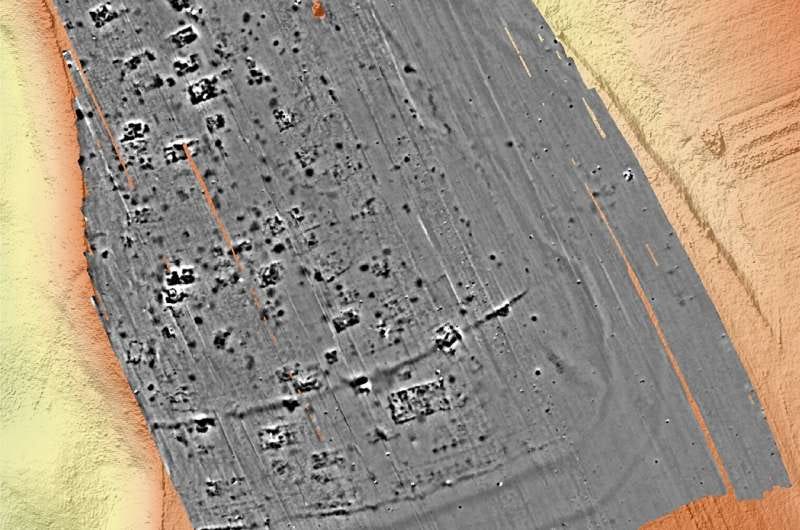
Unearthed Mega-Structure Hints at Communal Rule in Romania 6,000 Years Ago — Excavations at Stăuceni–Holm in northeastern Romania uncovered a massive 350 m² (≈3,770 sq ft) structure dating to about 4000 BCE within a Cucuteni–Trypillia settlement. The building featured a large clay floor and post-supported framework but lacked typical domestic features like ovens or storage pits. Its prominent position near the settlement entrance and its size—far larger than surrounding homes—suggest it served as a communal assembly hall or administrative center. The broader culture shows little evidence of elites or wealth disparity, and the structure supports the idea that these large prehistoric communities may have been organized through collective governance rather than centralized authority.
6,000-Year-Old Megalithic Burial Mounds In Serra Do Laboreiro Reveal Why Prehistoric Builders Chose High Ground — According to a new study, hundreds of stone burial mounds in the Serra do Laboreiro region of northern Portugal, dating to around 4000 BCE, were systematically placed in elevated terrain rather than randomly distributed. A refined dataset of 178 confirmed monuments shows strong correlations with ridge lines, rocky outcrops, and natural boundaries, with elevation emerging as the most decisive factor. These mounds cluster along visually structured landscapes rather than maximizing territorial visibility, suggesting symbolic or navigational roles. Built over millennia, the monuments likely served as enduring markers tied to movement routes, social memory, and identity, embedding human meaning into prominent natural features across the Iberian highlands.
Water Ritual Complex Unearthed in North Sinai — A large ritual complex centered on water use was uncovered at ancient Pelusium (Tell el-Farama) in northeastern Egypt. The site features a circular basin about 115 feet (35 m) in diameter, enclosed by red brick walls and connected to a branch of the Nile, allowing it to fill with saline water. This likely symbolized the local deity Pelusius, linking water to religious practice. The complex reflects the importance of controlled water features in ritual settings, combining hydraulic engineering with symbolic design. Its scale and construction indicate an organized effort to integrate natural resources into ceremonial architecture at a major ancient city on Egypt’s eastern frontier.
Byzantine Fortified Monastery Identified in Spain — A fortified monastic complex at El Monastil in southeastern Spain has been identified as a Byzantine-era settlement dating to the late 500s CE. Built along a branch of the Roman Via Augusta, the site includes a church with a horseshoe-shaped apse and a baptismal basin carved into bedrock. Finds include fragments of lamellar armor, bronze tax weights, iron tools, a ring-key, a spoon, a ceramic seal bearing Christian symbols, and an ivory container decorated with a mythological scene. A marble altar imported from Greece was also recovered. The mix of military and religious items indicates a combined garrison and monastic community that later passed into Visigothic and then Islamic use, reflecting shifting control in the region.
Ancient Rock Art Discovered In Hidalgo — A set of 16 petroglyphs and painted images was documented at the El Venado site in Hidalgo, Mexico, located on rocky slopes near the Tula River and La Requena Dam. Some of the artwork dates back more than 2000 BCE (over 4,000 years ago), while others were created as late as 900–1521 CE, showing continuous use of the site across millennia. The imagery includes human figures with shields and headdresses, a figure linked to the rain deity Tlaloc with goggle-like eyes, stylized faces, a four-legged animal possibly representing a deer, and shapes interpreted as snakes or lightning. Pigments derived from mineral or plant sources were used for paintings, while carvings were made with repeated pointed marks. The placement near water sources suggests the site functioned as a ritual landscape tied to seasonal cycles and symbolic practices.
That’s it for the free Top 5! If you’re a free subscriber, sign up for the paid plan for another 28 discoveries and 3 recommended pieces of content covering agriculture, coins, and family structure.
Until next time, thanks for joining me!
-James
Twitter: @jamesofthedrum
P.S. Here’s my Buy Me A Coffee link if you’d like to support my efforts with a donation.
P.P.S. If you want access to the paid version but it’s a little too steep for you right now, just email me — I want this to be accessible.
P.P.P.S. Paid members, read on!
